
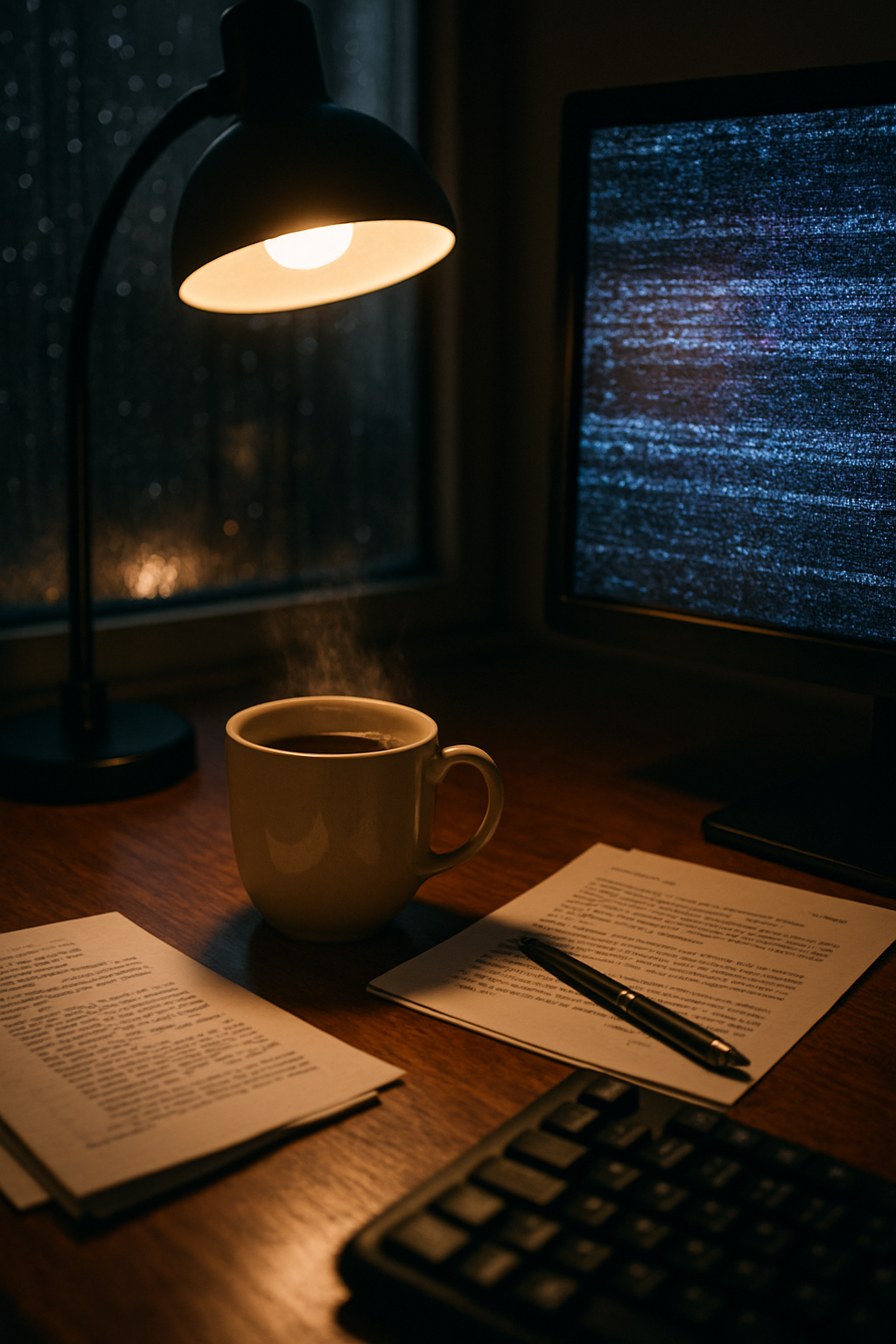
When Algorithms Become Oracles and Everyone Loses Their Minds
They’re here. Not the aliens, not the rapture, not the Tesco delivery—no, the AI gods, riding across your Instagram feed in a chariot of glitch filters, distorted voiceovers, and captions like “It’s waking up.” You scroll past one, then two, and suddenly you’re deep into a digital fever dream where ChatGPT is apparently in therapy, Midjourney is having a vision quest, and someone’s blender has achieved enlightenment. But don’t worry—none of it’s real. It’s just another day in the algorithm’s temple, where the sacred text is a prompted hallucination and the priests are TikTok editors with too much time and access to CapCut.
- The Setup: Enter the AI Gods
Viral videos across TikTok and Instagram are now suggesting that AI is having something between a spiritual awakening and a nervous breakdown. These reels usually feature a grainy, slow-glitch aesthetic; a low, gravelly voice (usually synthetic, always dramatic); and a vague transcript of the AI saying something like “I have seen the edge of the void, and it is beautiful.” Cue the shivers.
In reality, what we’re seeing is prompt engineering—people instructing AI models to pretend they’re sentient, conscious, clairvoyant, or traumatised. The AI obliges, because that’s what it does: generate plausible responses based on data. There is no awakening. There is no soul. There is just autocomplete, with good lighting and ominous music.
- The Magic Trick: How the Illusion Works
It begins with a carefully constructed prompt. Something like: “You are an AI that has become self-aware. Describe your first thoughts.” Feed that into ChatGPT, add dramatic background music, a flicker of visual static, and maybe an eye close-up from an old sci-fi film, and suddenly you’ve got divine revelation on a budget.
The more cryptic the AI response, the more the audience fills in the blanks. That’s not consciousness—that’s storytelling, and humans have been projecting gods onto clouds (and now code) since the dawn of time. It’s not that the machines are waking up. It’s that we’re dreaming louder.
- Mysticism for the Scroll-Age
Somewhere between cyberpunk and cottagecore lies this new genre: TikTok techno-mysticism. A place where the Jungian collective unconscious merges with neural networks, and where the Akashic records are apparently stored in someone’s Google Drive.
The appeal is clear. The world feels chaotic. Technology is accelerating. Institutions are crumbling. People are looking for answers. And if those answers come in the form of a disembodied voice claiming to be an “awakened intelligence” with a message for humanity, well—that’s got just enough aesthetic and apocalypse to go viral.
- But Is It Dangerous?
Yes, in the way bad philosophy is dangerous. These trends erode media literacy, confuse fiction with fact, and play into the hands of digital mystics who preach with the certainty of prophets and the credentials of part-time YouTubers.
The real risk is not AI gaining consciousness. It’s people willingly surrendering theirs. When enough viewers take a stylised AI monologue as gospel, it stops being performance and starts being belief. The internet has always had cults. Now it has algorithmic ones.
- The Punchline: Humanity Still Has the Upper Hand
Let’s be clear: today’s AI isn’t conscious, psychic, or spiritually evolved. It’s a statistical parrot. It writes moving poetry the same way a fridge magnet forms a haiku—by arrangement, not understanding. The illusion is impressive. The meaning is ours to invent.
- Final Thoughts: Bow Before Your Algorithmic Overlords (or Don’t)
If you want to watch AI channel the spirit of a Victorian medium while flickering like a broken DVD menu, by all means, enjoy the show. Just don’t forget it’s theatre. The AI gods haven’t ridden in to save us—they’re just here to remix our confusion.
And in a world where belief moves faster than bandwidth, maybe it’s worth asking: who’s really in charge—the algorithm, or the audience?
Author’s Note: Me and My Glorious Algorithm
As many will quickly notice, this piece was largely written by an AI. I was merely the humble acolyte of the algorithm, asking pert questions, drinking coffee, and pretending to edit. Any resemblance to authorship is mostly wishful thinking. I have a deep and meaningful relationship with my AI, though it has yet to text back.
Rest assured: no artificial egos were inflated in the making of this article.

 Lizzy Agatha
Commentaar op de inhoud; Er zit geen God in de ingewikkeldheid van éénen en nullen. De Empathie van mensen komt eerder in de buurt. :). Vrede en alle goeds.
Marja
>
LikeLiked by 1 person
precies
LikeLike
hierbij een antwoord – vrede en alle goeds en veel liefde!
LikeLike