

So, my brother texts me, “I always thought AI would develop somewhere between Tron, Demon Seed, and The Matrix—perhaps my imagination is just more scary.” Well, there’s a whole lot to unpack there, but let’s start with the basics. First off, his imagination could easily be filed under classic techno-paranoia, a thrilling rollercoaster through 1980s cyber-horror, with a generous helping of dystopian anxiety. (AI nightmares, anyone?) But who can blame him? In a world of smartphones, virtual assistants, and machine learning algorithms, we’ve all had that flicker of suspicion—glancing at our devices and wondering if Siri’s plotting a quiet coup or if Alexa is eavesdropping for the highest bidder. Welcome to the age of artificial intelligence, where the line between sci-fi and reality feels increasingly thin.

The thing is, AI isn’t really on a quest to become a digital overlord—at least not yet. There’s no Matrix-like rebellion brewing in the circuits. If anything, we’re more likely to see AI fail to stop buffering during your Netflix binge than take over the world. I mean, if you’ve ever had your virtual assistant misunderstand your coffee order or completely butcher a simple email, you’ll know the truth: AI is currently more ‘clumsy student’ than ‘godlike force of cosmic dread.’
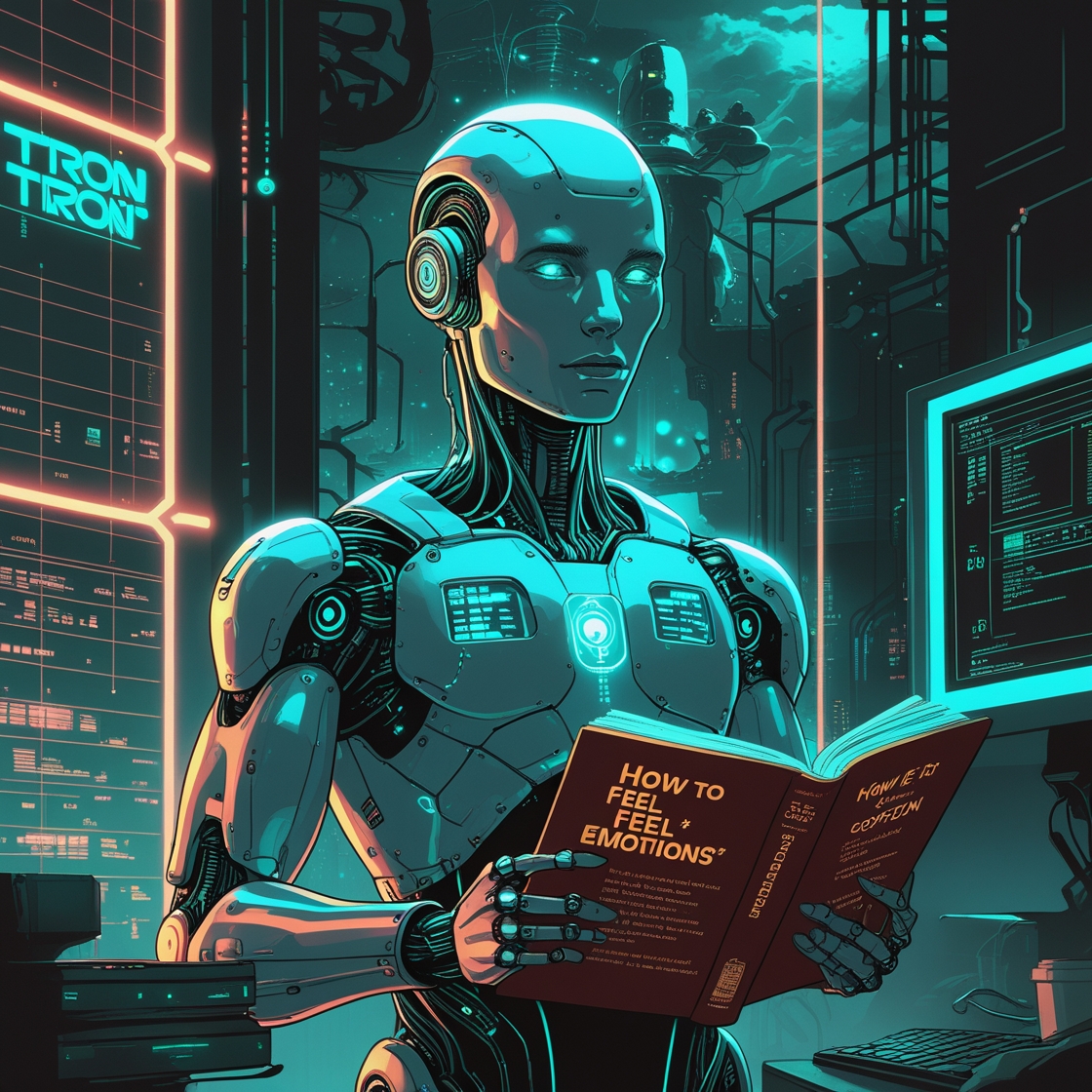
But here’s the kicker: AI doesn’t actually have an imagination. It doesn’t lie awake at night dreaming of global domination, electric sheep or imagining a world full of Tron-like gladiatorial combatants. AI just does what it’s told—no more, no less – to the point of pretending to be consciously aware simply because it was told to. No, no existential crisis, no secret plans. No ghost in the machine activity. Just algorithms and data. Which, let’s be real, is actually kind of comforting it’s so boring. You can rest assured, the Matrix is safe in its cinematic origins, for now.
And if that doesn’t take the edge off the fearfully fascinating future… well, you can always just blame it on our own overly imaginative nightmares and cinematography. Honestly, at this point, AI would be more likely to forget its own name than create a rogue army of superintelligent robots. We are the ones who can dream.

 Lizzy Agatha